Views: 0 Author: Site Editor Publish Time: 2026-08-04 Origin: Site
Building a solid drone battery pack is a bit like building a high-performance engine – every connection has to be perfect. Pure nickel strip sits right at the heart of those connections. It links individual lithium cells together, carries high current during takeoff and aggressive maneuvers, and has to survive vibration, temperature swings, and repeated charge-discharge cycles. Get the strip right and your pack stays efficient and safe. Get it wrong and you risk voltage drops, hot spots, or weld failures. Let’s dig into how to choose wisely.
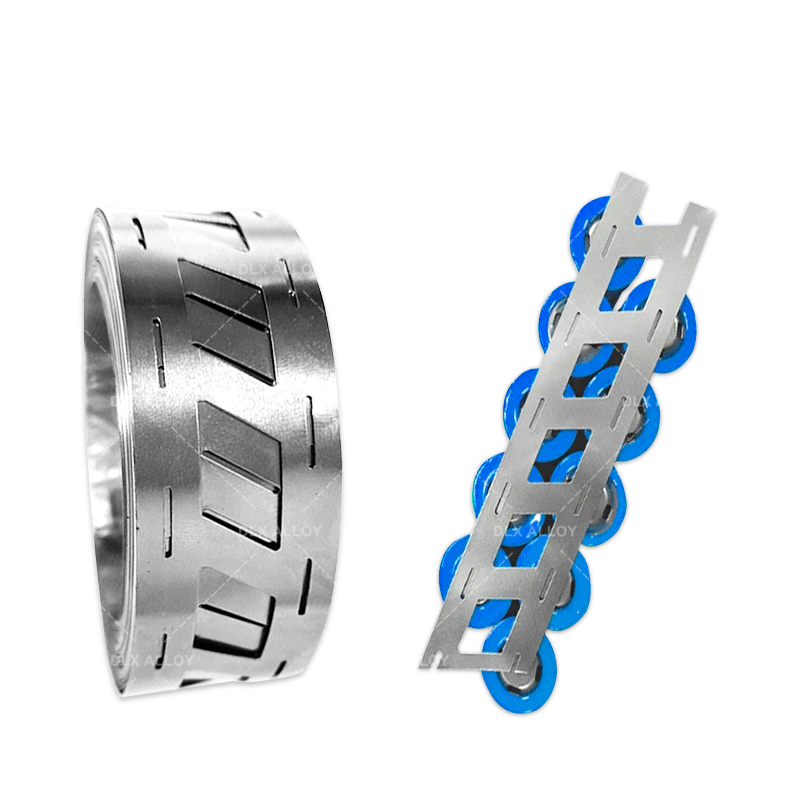
In multi-cell drone packs (think 6S, 12S, or higher), pure nickel strip acts as the conductive bridge between cells. It is the preferred material for spot welding because of its excellent electrical conductivity, good ductility, and strong resistance to corrosion. Unlike copper (which is harder to weld consistently in thin gauges) or aluminum (which oxidizes easily), pure nickel strip offers a reliable balance that battery builders love.
Low-purity material can introduce impurities that raise resistance. Wrong thickness can either overheat under high current or become too stiff for clean welding. Poor surface finish leads to inconsistent welds. In a drone, any of these issues can mean reduced flight time, unexpected power loss, or safety risks. That’s why selection criteria matter.
Pure nickel strip is a thin, flat form of high-purity nickel (typically 99.6% or higher) rolled to precise thicknesses and widths. It is widely used for battery interconnects, especially in lithium-ion and LiPo packs for drones, EVs, and power tools.
Most pure nickel strip falls into two main grades:
Ni200 (N6) – approximately 99.6% nickel
Ni201 (N4) – higher purity, lower carbon content (often ≥99.9%)
Grade | Ni+Co | Cu | Si | Mn | C | Mg | S | P | Fe |
N4 | 99.9 | ≤0.015 | ≤0.03 | ≤0.002 | ≤0.01 | ≤0.01 | ≤0.001 | ≤0.001 | ≤0.04 |
N6 | 99.5 | 0.10 | 0.10 | 0.05 | 0.10 | 0.10 | 0.005 | 0.002 | 0.10 |
Ni201 | ≥99.9 | ≤0.25 | ≤0.35 | ≤0.35 | ≤0.02 | / | ≤0.01 | / | ≤0.40 |
Ni200 | ≥99.6 | ≤0.25 | ≤0.35 | ≤0.35 | ≤0.15 | / | ≤0.01 | / | ≤0.40 |
Ni201’s lower carbon content makes it better for higher-temperature applications and reduces the risk of embrittlement. For most drone battery packs operating at moderate temperatures, both work well, but many builders prefer the higher-purity option for critical high-discharge applications. DLX Alloy supplies both grades with tight composition control.
Here are the practical points you should evaluate.
Higher purity means lower electrical resistance and better corrosion resistance. Look for low levels of copper, iron, sulfur, and carbon. DLX Alloy provides clear composition data for N4/Ni201 and N6/Ni200 grades so you know exactly what you’re getting.
Common thicknesses for drone packs range from 0.1 mm to 0.3 mm (sometimes thinner or thicker depending on current). Width is typically matched to the cell tab size or desired current path.
A thicker or wider strip carries more current with less heat generation. Undersizing creates hotspots; oversizing adds unnecessary weight – a big deal in drones where every gram counts.
Pure nickel offers good conductivity. Consistent resistivity across the strip is crucial so every connection behaves the same way.
The strip needs enough ductility for clean spot welds without cracking, yet enough strength to handle vibration. Soft or annealed temper is often preferred for welding.
A clean, smooth, bright surface improves weld quality and reduces contact resistance. Hardness options (soft, 1/2 hard, hard) affect formability and spring-back.
Drone packs can face humidity and temperature cycling. Pure nickel’s inherent corrosion resistance helps maintain low-resistance connections over the pack’s life.
As a rough rule of thumb, many builders use ampacity charts or empirical testing. Higher continuous and peak currents (common in FPV and heavy-lift drones) demand thicker or multiple parallel strips.
For a high-discharge 6S pack, 0.15–0.2 mm pure nickel strip is common. Larger industrial or long-endurance packs may use 0.25 mm or wider configurations. Always validate with thermal testing.
High-purity nickel welds cleanly with proper electrode pressure and current settings, producing strong, low-resistance joints.
During aggressive maneuvers, packs can heat up quickly. Pure nickel maintains integrity better than lower-grade alternatives.
When reliability matters, the supplier matters just as much as the material.
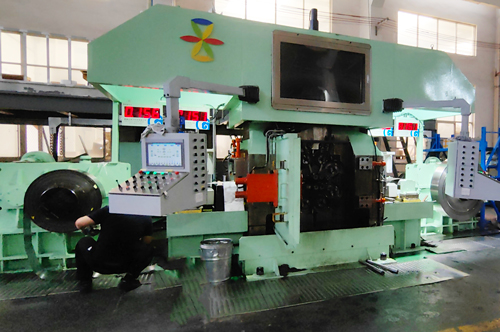
DLX Alloy manufactures pure nickel strip in thicknesses from 0.01 mm to 3 mm and widths from 5 mm to 455 mm, with tight tolerances. Soft, 1/2 hard, and hard tempers are available, along with bright annealed surfaces.
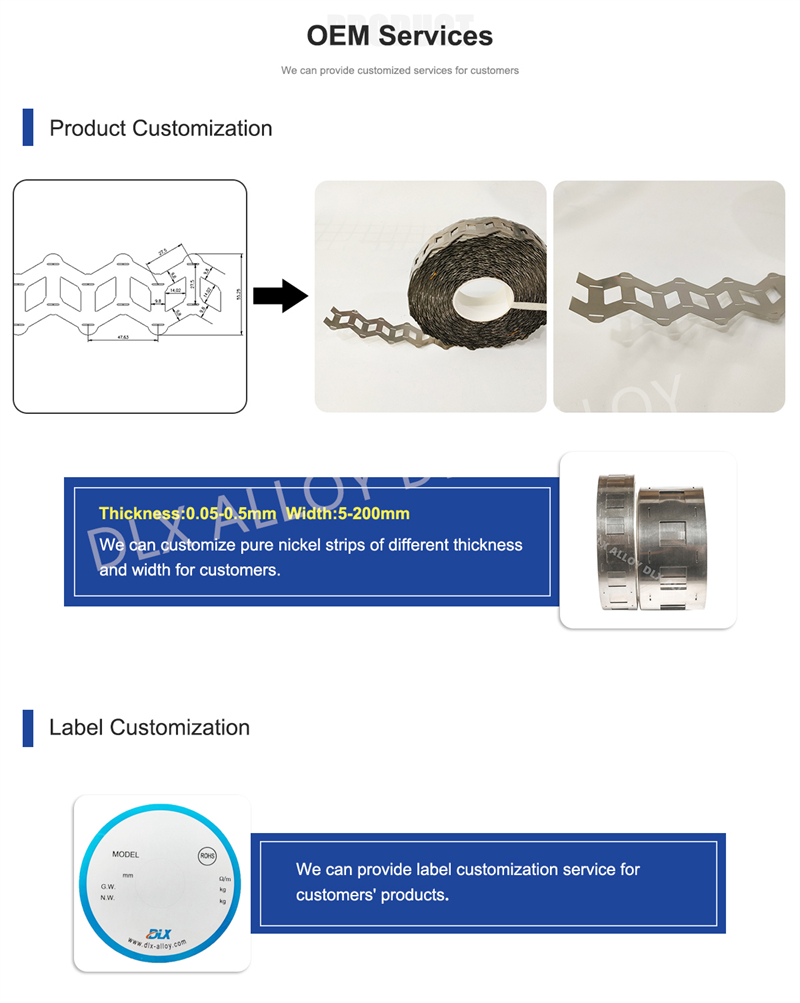
You can order coils or cut lengths. Custom widths and thicknesses are straightforward. Their pure nickel is also available as wire, rod, and other forms if your project expands.
With over 20 years of experience, a 12,000 m² facility, and rigorous incoming material testing, process control, and final inspection (chemical analysis, mechanical testing, surface checks), DLX Alloy delivers consistent quality. They offer free samples, competitive bulk pricing, and fast response.
Customers value their combination of high purity, precise dimensions, reliable supply, and willingness to customize. Global shipping and ready stock help keep production lines moving.
Calculate continuous and peak current. Factor in safety margin and weight targets.
For most drone packs, high-purity Ni201 or quality Ni200 works well. Confirm composition with the supplier.
Match thickness and width to current needs and cell geometry. Prefer soft or annealed for easy welding unless stiffness is required.
Check certifications, tolerance control, surface quality, and ability to supply samples or small trial orders. DLX Alloy scores strongly here.
Inconsistent thickness or dirty surfaces cause welding defects. Always specify and verify tolerances.
Cheap, low-purity strip can cost more in failures and rework. Balance cost with performance and supplier reliability.
As drones push higher energy density and faster charging, demand grows for tighter tolerances, higher purity, and optimized surface treatments. Suppliers like DLX Alloy continue refining processes to meet these needs.
Choosing the right pure nickel strip for drone battery packs comes down to purity, correct dimensions, good conductivity, excellent weldability, and a reliable supplier. High-quality pure nickel strip from a manufacturer like DLX Alloy gives you consistent performance, clean welds, and the confidence that your packs can handle the demands of flight. Take the time to define your electrical and mechanical requirements, request samples, and work with a supplier who understands battery applications. Your drones (and your customers) will thank you for it. Ready to source premium pure nickel strip? Reach out to DLX Alloy and get the material that keeps your packs flying strong.
Pure nickel offers a strong combination of good electrical conductivity, excellent spot-weldability, corrosion resistance, and mechanical ductility that suits the vibration and thermal cycling of drone packs.
Typical thicknesses range from 0.1 mm to 0.3 mm depending on current requirements and cell size. Always match the strip to your pack’s continuous and peak current needs.
Ni201 (higher purity, lower carbon) is often preferred for higher-temperature or more critical applications, while Ni200 is widely used and cost-effective for many standard packs. Both are available from quality suppliers like DLX Alloy.
Yes. DLX Alloy offers a wide range of thicknesses and widths plus customization, tight tolerances, different tempers, and free samples to help you validate the material for your specific drone battery design.
High-purity, consistent pure nickel strip reduces contact resistance, improves weld strength, minimizes hot spots, and supports longer cycle life and more reliable high-discharge performance – all critical for safe and efficient drone operation.