Views: 0 Author: Hanna Publish Time: 2026-06-08 Origin: Site
Hey there, fellow heater enthusiasts and industry pros! If you're in the business of designing, building, or maintaining electric heaters, you've probably wrestled with the big question: which resistance wire will keep things toasty without letting you down? Today, we're diving deep into why Nichrome wire (also known as NiCr wire) often comes out on top compared to FeCrAl wire for many electric heater applications. And as a proud partner in high-performance alloys, I'll highlight how DLX Alloy delivers top-tier Nichrome solutions that pros swear by.
Picture this: your heater element is like the heart of the system. You want it strong, steady, and ready for the long haul. Let's break it all down step by step so you can see why switching to or sticking with premium Nichrome wire from DLX Alloy might just be the smartest move for your next project.
Electric heaters power everything from your cozy home toaster to massive industrial furnaces. At the core? Resistance wire that turns electricity into reliable heat. But not all wires are created equal.
Resistance wires like Nichrome and FeCrAl work on the principle of Joule heating—electricity meets high resistance, and boom, heat is born. In today's energy-conscious world, you need materials that deliver consistent performance without guzzling power or failing prematurely.
Choosing the wrong wire can lead to uneven heating, frequent breakdowns, or skyrocketing maintenance costs. That's where Nichrome wire shines. With DLX Alloy as your supplier, you're getting alloys engineered for real-world demands, backed by over 20 years of expertise.
Nichrome, primarily a nickel-chromium alloy, is a superstar in heating elements. DLX Alloy specializes in various grades, ensuring you get exactly what your electric heaters need.
Typical Nichrome, such as the popular Cr20Ni80, boasts about 80% nickel and 20% chromium. This combo gives it high electrical resistivity (around 1.09-1.18 μΩ·m), excellent oxidation resistance, and the ability to handle temperatures up to 1200°C continuously. DLX's NiCr alloys maintain mechanical stability even under thermal stress, forming a protective chromium oxide layer that prevents degradation.
DLX Alloy offers Cr20Ni80, Cr15Ni60, and more—perfect for heating coils. These wires are ductile, non-magnetic in many grades, and resist sagging or breaking. Whether you need wire, strip, or rod, DLX has you covered with strict quality control from raw materials to final product.
Performance material | Cr10Ni90 | Cr20Ni80 | Cr30Ni70 | Cr15Ni60 | Cr20Ni35 | Cr20Ni30 | |
composition | Ni | 90 | Rest | Rest | 55.0~61.0 | 34.0~37.0 | 30.0~34.0 |
Cr | 10 | 20.0~23.0 | 28.0~31.0 | 15.0~18.0 | 18.0~21.0 | 18.0~21.0 | |
Fe | -- | ≤1.0 | ≤1.0 | Rest | Rest | Rest | |
Maximum temperature℃ | 1300 | 1200 | 1250 | 1150 | 1100 | 1100 | |
Meltiing point ℃ | 1400 | 1400 | 1380 | 1390 | 1390 | 1390 | |
Density(g/cm3) | 8.7 | 8.4 | 8.1 | 8.2 | 7.9 | 7.9 | |
Resistivity | -- | 1.09±0.05 | 1.18±0.05 | 1.12±0.05 | 1.00±0.05 | 1.04±0.05 | |
Elongation at rupture | ≥20 | ≥20 | ≥20 | ≥20 | ≥20 | ≥20 | |
Specific heat J/g.℃ | -- | 0.44 | 0.461 | 0.494 | 0.5 | 0.5 | |
Thermal conductivity KJ/m.h℃ | -- | 60.3 | 45.2 | 45.2 | 43.8 | 43.8 | |
Coefficient of lines expansion | -- | 18 | 17 | 17 | 19 | 19 | |
Micrographic structure | -- | Austenite | Austenite | Austenite | Austenite | Austenite | |
Magnetic properties | -- | Nonmagnetic | Nonmagnetic | Nonmagnetic | Nonmagnetic | Nonmagnetic | |
Imagine flipping on your heater and getting instant, even warmth every single time. That's the magic of NiCr wire's stable resistivity, which doesn't fluctuate wildly with temperature. It's why DLX Alloy Nichrome wire is trusted in precision applications.
FeCrAl (Iron-Chromium-Aluminum) is another common heating alloy, often cheaper upfront. But let's see where it falls short for many electric heater setups.
FeCrAl typically features high iron content with chromium and aluminum. It can reach higher peak temperatures (up to 1400°C in some cases) and forms an alumina oxide layer. However, it tends to be more brittle, especially after prolonged use, and has lower hot strength.
You'll find FeCrAl in some high-temp furnaces, but its embrittlement and lower ductility make it trickier for applications with vibration or frequent cycling—common in electric heaters.
Oxidation is the silent killer of heating elements. Here's where Nichrome wire pulls ahead.
Nichrome develops a tough, adherent chromium oxide scale that clings beautifully and renews itself. This keeps the wire protected longer in oxidizing atmospheres typical of electric heaters.
Unlike FeCrAl's alumina layer, which can be more insulating but prone to cracking, Nichrome's layer offers better overall corrosion resistance and stability. DLX Alloy's NiCr products excel here, lasting longer in humid or variable conditions.
Consistent heat output is king for efficient electric heaters.
Nichrome's resistivity stays reliable across temperatures, meaning your heaters perform predictably. FeCrAl can vary more, leading to inefficiencies.
With DLX Alloy's Nichrome wire, you get uniform coils that heat evenly, reducing hotspots and energy waste. Perfect for everything from small appliances to large systems—saving you money in the long run.
No one wants a wire that snaps under pressure.
Nichrome remains ductile even after thousands of cycles. FeCrAl often becomes brittle, increasing failure risk. DLX's high-quality processing ensures superior longevity.
Think household heaters or lab equipment. Nichrome handles the start-stop better, thanks to its mechanical properties. Users report fewer replacements with DLX NiCr wire.
While FeCrAl might edge out in extreme peaks, Nichrome offers dependable operation in the 1100-1200°C range most electric heaters demand, without rapid degradation.
For most commercial and industrial electric heaters, the balance of properties favors Nichrome—especially when reliability trumps absolute max temp.
Nichrome is easier to bend, wind into coils, and weld. FeCrAl can be stiffer and more prone to issues during fabrication. DLX Alloy supplies wire that's ready for your production line.
Whether prototyping or mass-producing, DLX Nichrome speeds up manufacturing and reduces defects.
Many Nichrome grades are non-magnetic, minimizing issues in sensitive electronics near heaters.
Lower chance of sudden breaks means safer operation. Trust DLX Alloy for peace of mind.
Sure, FeCrAl might cost less initially, but replacements add up.
Nichrome's durability means fewer downtimes and lower total ownership costs—especially with bulk options from DLX.
DLX Alloy's 12,000m² factory and 1200-tonne capacity ensure competitive pricing for high-volume NiCr wire buyers.
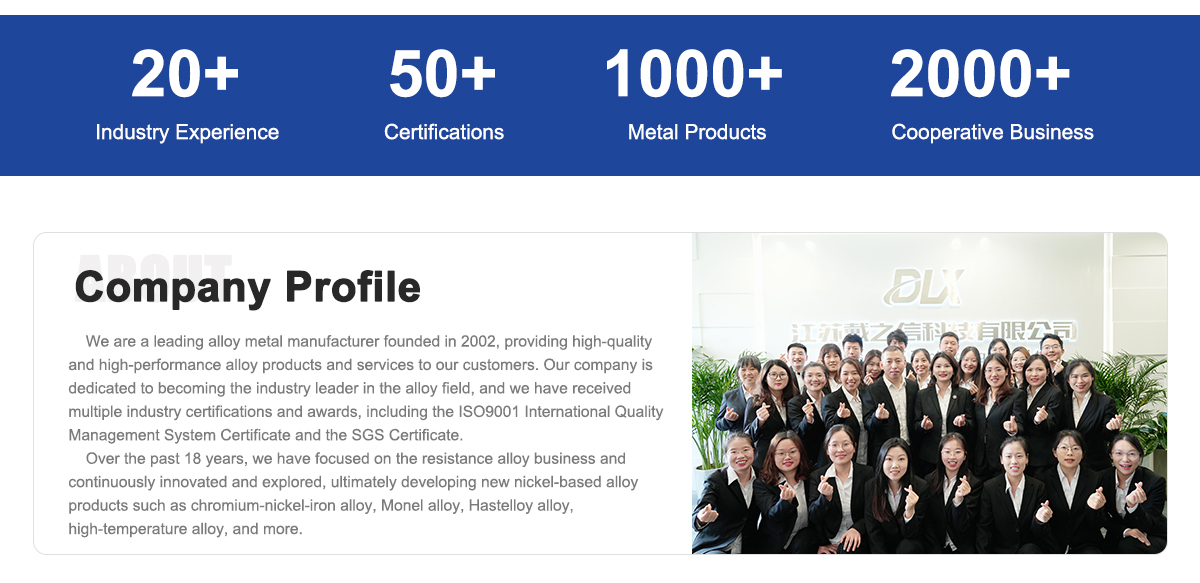
DLX Alloy isn't just a supplier—they're experts in NiCr alloys since 2002, exporting to over 130 countries.
From strict raw material control to 100% inspection, their processes guarantee quality. Custom compositions? No problem.
ISO-certified and focused on innovation, DLX helps you optimize for specific heater needs with wires, strips, and more.
Toasters, ovens, kilns, and more—DLX Alloy Nichrome wire powers them all reliably.
Clients in aerospace, automotive, and electronics rave about the performance of Cr20Ni80 and similar grades for heating elements.
In the battle of heating wires, Nichrome wire stands tall for most electric heater applications thanks to its unbeatable combination of oxidation resistance, consistent resistivity, ductility, and long-term reliability. While FeCrAl has its place in niche ultra-high-temp scenarios, Nichrome—especially premium grades from DLX Alloy—delivers better overall performance, safety, and value. If you're ready to upgrade your heaters with superior NiCr wire that professionals trust, connect with DLX Alloy today. Your equipment will thank you. Don't settle for less—choose the wire that heats smarter and lasts longer!
1. What makes Nichrome wire better than FeCrAl for most household electric heaters?
Nichrome offers superior ductility, consistent resistance, and resistance to embrittlement during on-off cycles, leading to longer life and fewer failures compared to FeCrAl.
2. Does DLX Alloy provide custom Nichrome wire specifications?
Absolutely! DLX Alloy specializes in tailored NiCr alloys, including wires, strips, and rods in various grades like Cr20Ni80, with full customization options.
3. How does the oxidation resistance of Nichrome compare to FeCrAl in electric heaters?
Nichrome's chromium oxide layer provides excellent, self-renewing protection in typical operating conditions, often outperforming FeCrAl's alumina layer in terms of adherence and overall durability.
4. Is Nichrome wire more expensive than FeCrAl, and is it worth it?
While initial costs may be higher, Nichrome's longevity and performance reduce total expenses through fewer replacements and better efficiency—making DLX Alloy's products a smart investment.
5. What are the key factors to consider when buying Nichrome wire for industrial heaters?
Focus on grade (e.g., Cr15Ni60 or Cr20Ni80), diameter, resistivity, max temperature rating, and supplier quality. DLX Alloy ensures compliance with international standards for reliable results.