
Views: 0 Author: Hanna Publish Time: 2026-01-15 Origin: Site
Hey there, business folks! If you're in the B2B space and dealing with materials that need to handle serious heat without breaking a sweat, you've probably crossed paths with NiCr alloy wires. Also known as Nichrome wires, these bad boys are the unsung heroes in everything from toasters to industrial furnaces. But with 2026 rolling in, the landscape is shifting—new trends, innovations, and sustainability pushes are changing how we source and use them. In this guide, I'm going to walk you through everything you need to know, like we're chatting over coffee. We'll cover the basics, dive into applications, peek at market vibes, and even give you a solid buying roadmap. Ready to heat things up? Let's jump in.

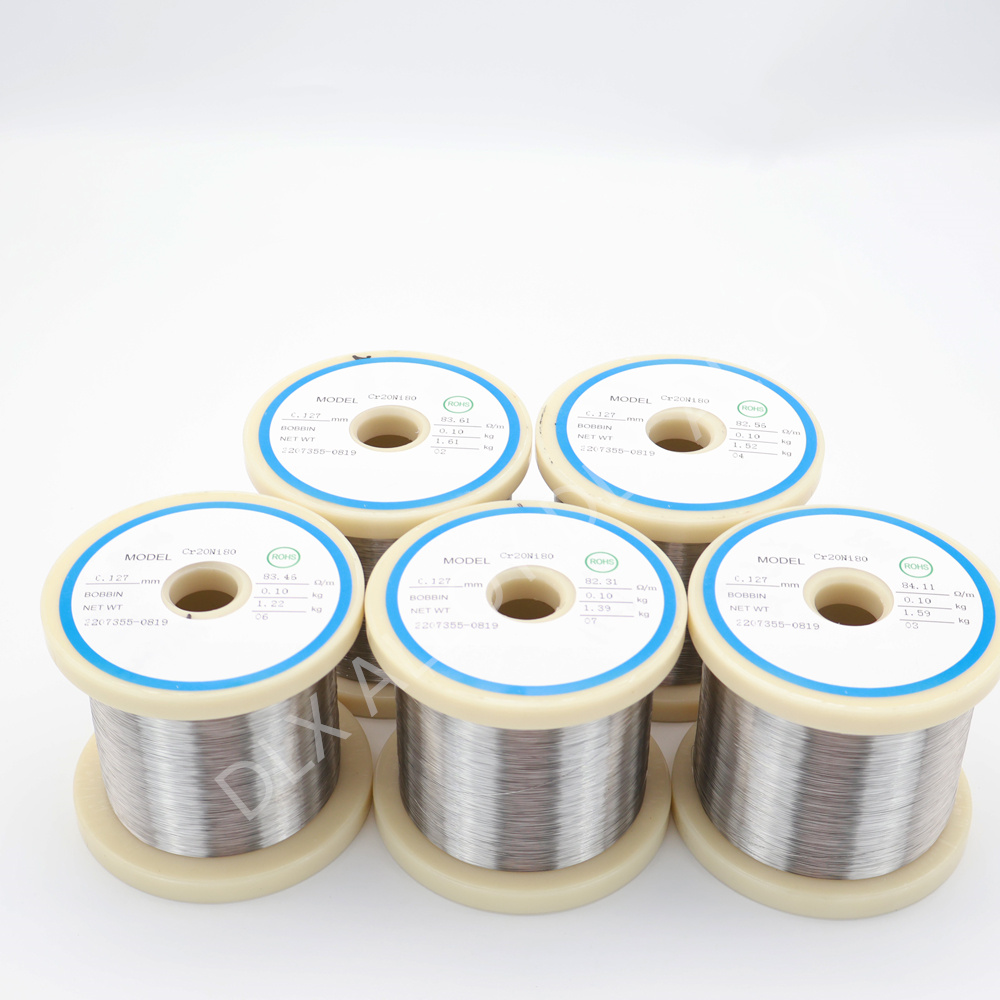
Picture this: You're running a manufacturing plant, and you need a wire that can glow red-hot without melting or corroding. That's where NiCr alloy wires shine—literally. These are nickel-chromium alloys designed for high-resistance heating, and in 2026, they're more relevant than ever with the push toward efficient, durable tech.
 At its core, NiCr alloy is a blend of nickel and chromium, often with a dash of iron or other elements for extra oomph. Think of it as a dynamic duo: Nickel brings the toughness and heat resistance, while chromium adds that anti-rust magic. The result? A wire that's perfect for electrical resistance applications. Properties like high melting points (up to 1400°C) and excellent oxidation resistance make it a go-to for industries where failure isn't an option. It's not just about surviving heat; it's about thriving in it, maintaining stability even when temperatures fluctuate wildly.
NiCr alloys didn't just pop up overnight. Back in the early 1900s, inventor Albert Marsh cooked up Nichrome as a heating element alternative to fragile carbon filaments. Fast-forward to today, and it's evolved into a staple for modern tech. Why does history matter in a B2B guide? Because understanding its roots helps you appreciate why it's still king in 2026—proven reliability meets cutting-edge tweaks.
From basic toasters in the '20s to aerospace components now, NiCr has adapted. In the '80s, we saw refinements in alloy ratios for better performance; by the 2010s, sustainability entered the chat. In 2026, expect smarter alloys with embedded sensors for real-time monitoring—talk about a glow-up!
What sets NiCr apart from the pack? It's all in the properties, my friend. These wires aren't just metal; they're engineered powerhouses. Let's break it down so you can see why they're worth your investment.
Imagine throwing a wire into a furnace and it comes out unscathed—that's NiCr for you. With operating temps up to 1200°C, it handles extreme heat without deforming. This is thanks to its high melting point and thermal stability. Ever wondered why your industrial heaters last longer? NiCr's got your back, reducing downtime and saving bucks on replacements.
Rust is the enemy, right? NiCr fights back with a protective oxide layer that forms naturally, shielding it from corrosive environments. Whether it's humid factories or chemical exposures, this wire stays strong. It's like giving your equipment a suit of armor—durable and low-maintenance.
In salty marine settings or acidic industrial zones, NiCr outperforms many alternatives. Tests show it retains 90% integrity after prolonged exposure, making it ideal for long-term B2B projects where reliability equals profitability.
Here's the magic: NiCr has high resistivity, meaning it turns electricity into heat efficiently without needing tons of power. Resistivity around 1.0-1.5 μΩ·m ensures consistent performance. Compare that to copper's low resistivity—NiCr is built for heating, not conducting.
Creep? That's when materials slowly deform under stress. NiCr resists it like a champ, thanks to its high creep strength. Add in good ductility and tensile strength (up to 700 MPa), and you've got a wire that bends but doesn't break—perfect for custom shapes in your operations.
Not all NiCr wires are created equal. Depending on your needs, you might pick one variant over another. Let's unpack the main types so you can match them to your B2B requirements.

This is the OG: 80% nickel, 20% chromium. It's versatile, with great oxidation resistance up to 1200°C. Ideal for general heating—think toasters or lab equipment. If you're starting out, this is your safe bet.
Lower nickel (60%), more chromium (15-16%), and some iron. It hits higher temps (up to 1150°C) but at a lower cost. Great for industrial apps where budget matters but performance can't slip.
You've got NiCr 70/30 for ultra-high resistance or NiCr 30/20 for specific niches. Each tweaks the ratio for targeted uses—like adding silicon for better longevity.
In 2026, custom blends are booming. Need more molybdenum for corrosion? Suppliers can tailor it, ensuring your B2B orders fit like a glove.
| Performance material | Cr10Ni90 | Cr20Ni80 | Cr30Ni70 | Cr15Ni60 | Cr20Ni35 | Cr20Ni30 | |
| composition | Ni | 90 | Rest | Rest | 55.0~61.0 | 34.0~37.0 | 30.0~34.0 |
| Cr | 10 | 20.0~23.0 | 28.0~31.0 | 15.0~18.0 | 18.0~21.0 | 18.0~21.0 | |
| Fe | -- | ≤1.0 | ≤1.0 | Rest | Rest | Rest | |
| Maximum temperature℃ | 1300 | 1200 | 1250 | 1150 | 1100 | 1100 | |
| Meltiing point ℃ | 1400 | 1400 | 1380 | 1390 | 1390 | 1390 | |
| Density(g/cm3) | 8.7 | 8.4 | 8.1 | 8.2 | 7.9 | 7.9 | |
| Resistivity | -- | 1.09±0.05 | 1.18±0.05 | 1.12±0.05 | 1.00±0.05 | 1.04±0.05 | |
| Elongation at rupture | ≥20 | ≥20 | ≥20 | ≥20 | ≥20 | ≥20 | |
| Specific heat J/g.℃ | -- | 0.44 | 0.461 | 0.494 | 0.5 | 0.5 | |
| Thermal conductivity KJ/m.h℃ | -- | 60.3 | 45.2 | 45.2 | 43.8 | 43.8 | |
| Coefficient of lines expansion | -- | 18 | 17 | 17 | 19 | 19 | |
| Micrographic structure | -- | Austenite | Austenite | Austenite | Austenite | Austenite | |
| Magnetic properties | -- | Nonmagnetic | Nonmagnetic | Nonmagnetic | Nonmagnetic | Nonmagnetic | |
Ever curious about how these wires go from raw metal to your factory floor? It's a fascinating process, blending science and precision engineering. I'll keep it simple but detailed.
It starts with pure nickel and chromium melted in a vacuum furnace at 1500°C+ to avoid impurities. Alloys are mixed precisely—think of it as baking a cake where ratios make or break the result. This ensures uniform properties throughout.
The molten mix cools into ingots, then hot-rolled into rods. Drawing pulls them into thinner wires, reducing diameter step by step. It's like stretching taffy, but with metal—controlled to hit exact gauges from 0.05mm to 7.5mm.
Advanced tech like cold drawing refines the surface, ensuring smoothness for better conductivity. Quality checks at every step catch flaws early.
Annealing heats and cools the wire to relieve stress, boosting flexibility. Finishing might include coating or spooling—ready for shipment to your B2B doorstep.

NiCr wires aren't niche; they're everywhere. From everyday gadgets to high-stakes industries, their versatility is a game-changer. Let's explore where they fit in 2026.
This is NiCr's sweet spot. It converts electricity to heat efficiently, powering everything from small devices to massive setups.
Your morning toast? Thanks to NiCr in toasters and ovens. Hair dryers, water heaters—it's the backbone of consumer goods, lasting years without fail.
In factories, NiCr heats kilns for metal annealing or plastic molding. Imagine a pottery kiln or heat-treatment oven—NiCr ensures even, reliable temps, boosting productivity.
Need lightweight, heat-resistant wires for engine sensors or de-icing? NiCr delivers, withstanding vibrations and extremes. In 2026, electric vehicles are amping up demand for efficient heating in batteries.
From surgical tools to vaping devices, NiCr's precision heating is key. In labs, it's in foam cutters or ceramic supports—versatile and safe.
Rhetorical question: How do you cut precise foam for prototypes? NiCr hot-wire cutters, of course, offering clean, controlled cuts.

2026 is shaping up big for NiCr. With global markets rebounding, let's look at the numbers and what's driving them.
The nickel alloy wires market is eyeing USD 5.8 billion by 2034, but for NiCr specifically, expect 6-7% CAGR through 2026. Drivers? Rising EV adoption, renewable energy, and industrial automation. Sustainability regs are pushing eco-friendly variants too.
North America leads in innovation, but Asia-Pacific is exploding with manufacturing hubs.
Innovation isn't just buzz—it's transforming NiCr. In 2026, we're seeing smarter, greener options.
New blends with molybdenum or titanium boost strength. Think high-entropy alloys for better hydrogen storage in energy apps—like a supercharged battery wire.
Eco-alloys reduce mining impact, with recycled nickel cutting carbon by 30%.
Plasma treatments enhance properties without extra materials—sustainable and smart.
Choosing NiCr? Let's stack it against rivals to see why it often wins.
Kanthal's cheaper and hits higher temps (1400°C), but NiCr offers better ductility and non-magnetic properties. For wet corrosion? NiCr edges out.
Copper conducts better but heats poorly and corrodes faster. NiCr's higher resistance makes it ideal for heating—copper for wiring.
NiCr costs more upfront but lasts longer, slashing long-term expenses by 20-30%.
Time to get practical. Buying B2B? Here's how to nail it without regrets.
Gauge, length, alloy type—match to your specs. Check resistivity and temp ratings.
Look for ASTM B267 compliance. Certifications like ISO ensure quality.
Vet suppliers for reliability—bulk orders need consistent delivery. Ask for samples and references.
Prices hover at $10-50/kg in 2026, depending on grade. Factor in shipping and tariffs.
Negotiate for volume discounts—aim for long-term contracts to lock in rates. Always include warranties for defects.
Green is the new black in B2B. NiCr production is stepping up its eco-game.
Mining nickel isn't pretty, but 2026 sees cleaner processes cutting emissions by 25%.
NiCr is highly recyclable—up to 90% recovery rate. It's like giving old wires a second life, reducing waste.
Energy-efficient furnaces and renewable power are norms now, making your supply chain greener.
This guide highlights the leading position of NiCr (Nichrome) wires in 2026 industrial heating, covering key properties (1200°C+ resistance, oxidation/corrosion resistance, high resistivity), classic grades, applications (furnaces, appliances, aerospace, new energy), market trends, sustainable innovations, and B2B buying tips, underscoring superior reliability and cost-effectiveness.
DLX Alloy, a leading NiCr manufacturer with 20+ years, specializes in ASTM B267 certified Cr20Ni80 & NiCr 60/15 wires, renowned for excellent high-temp performance, stable resistivity and longevity, offering bulk customization and sustainable supply to empower your 2026 industrial heating projects.

NiCr stands out due to its high resistivity and temperature tolerance, making it more efficient for modern energy-saving apps compared to alternatives like copper.
Consider your max operating temp—80/20 for general use, 60/15 for higher heats—and always match to your power needs for optimal performance.
Yes, recycled blends and low-emission manufacturing are on the rise, helping B2B buyers meet ESG goals without sacrificing quality.
Absolutely—suppliers offer tailored ratios, coatings, and shapes to fit unique needs like aerospace or medical precision.


