
Views: 0 Author: Site Editor Publish Time: 2026-03-23 Origin: Site
When it comes to welding in high-temperature, corrosive environments, the choice of welding wire is critical. Inconel alloys, particularly Inconel 625 and Inconel 718, are highly favored for their strength, durability, and resistance to extreme conditions. But what sets these two alloys apart, and how do you know which one is right for your project?
At DLX Alloy, we are a trusted supplier of top-quality Inconel welding wires. Whether you're looking for Inconel 625 welding wire or Inconel 718 welding wire, we offer wholesale pricing, expert support, and reliable shipping to meet your needs. In this guide, we will compare Inconel 625 and Inconel 718, focusing on their properties, applications, and which one may be best for your specific welding requirements.

Inconel is a family of high-performance alloys primarily composed of nickel and chromium. These alloys are known for their excellent oxidation and corrosion resistance, making them ideal for high-temperature and high-stress applications. They are commonly used in industries such as aerospace, chemical processing, power generation, and marine engineering. The strength and versatility of Inconel welding wire make it a popular choice for welding, especially in situations where traditional steel would fail.


When choosing the right welding wire, it's crucial to understand the unique properties of each alloy. Let's explore the composition and performance differences between Inconel 625 and Inconel 718.
Inconel 625 is primarily composed of nickel, chromium, and molybdenum. This combination makes it highly resistant to oxidation and corrosion, particularly in aggressive environments involving acids, alkalis, and saltwater. The key elements in Inconel 625 include:
Nickel (58-72%)
Chromium (20-23%)
Molybdenum (8-10%)
These elements contribute to Inconel 625’s outstanding resistance to pitting, crevice corrosion, and oxidation at elevated temperatures.
Inconel 718, on the other hand, is a precipitation-hardenable alloy containing nickel, chromium, iron, and other elements such as molybdenum, niobium, and titanium. These elements give Inconel 718 its remarkable strength and ability to withstand high-stress environments, especially in the aerospace industry. The composition of Inconel 718 includes:
Nickel (50-55%)
Chromium (17-21%)
Iron (balance)
The addition of niobium and titanium allows Inconel 718 to be hardened by heat treatment, making it ideal for demanding applications where mechanical properties are a priority.
Inconel 625 offers superior resistance to oxidation and high-temperature corrosion but is generally softer compared to Inconel 718.
Inconel 718 excels in high-stress applications where strength is paramount. It can maintain its strength and integrity in environments exceeding 1300°F (704°C).
Both alloys offer excellent corrosion resistance, but their performance varies depending on the environment:
Inconel 625 is particularly resistant to a variety of corrosive environments, including acidic and chloride-containing environments.
Inconel 718 provides solid resistance to oxidation, but it performs best in dry, high-temperature environments, such as those found in jet engines and gas turbines.
| Steel grade | Inconel 600 | Inconel 601 | Inconel 625 | Inconel 718 | Inconel 725 | Inconel X-750 |
| C≤ | 0.150 | 0.100 | 0.100 | 0.080 | 0.030 | 0.080 |
| Mn≤ | 1.00 | 1.00 | 0.50 | 0.35 | 0.35 | 1.00 |
| P≤ | / | / | 0.015 | 0.015 | 0.015 | / |
| S≤ | 0.015 | 0.015 | 0.015 | 0.015 | 0.010 | 0.010 |
| Si≤ | 0.50 | 0.50 | 0.50 | 0.35 | 0.20 | 0.50 |
| Cr≤ | 14.0-17.0 | 21.0-25.0 | 20.0-23.0 | 17.0-21.0 | 19.0-22.5 | 14.0-17.0 |
| Ni≤ | ≥72.0 | 58.0-63.0 | ≥58.0 | 55.0-59.0 | 55.0-59.0 | ≥70 |
| Mo | / | / | 8.0-10.0 | 2.8-3.3 | 7.0-9.5 | / |
| Cu | ≤0.50 | ≤1.50 | / | ≤0.30 | / | ≤0.50 |
| N | / | / | / | / | / | / |
| Nb | / | / | 3.15-4.15 | 4.75-5.50 | 2.75-4.00 | 0.70-1.20 |
| other | Fe:6.0-10.0 | Al:1.0-1.7 | Co:≤1.0Ai:≤0.4 0Tr:0.40Fe:≤5.0 | AI:0.20-0.80Ti:0.65-1.15B≤0.006 | Tr:1.0-1.7AI≤0.35 | Co:≤1.0 AI:0.4-1.0Tr:0.25-2.75Fe:5.0-9.0 |
Welding with Inconel 625 welding wire requires precise control over the process due to the alloy's tendency to form a thick oxide layer at high temperatures. Common welding techniques for Inconel 625 include:
TIG Welding
MIG Welding
Stick Welding (SMAW)
However, special care must be taken to avoid cracking and ensure optimal joint formation. The wire should also be preheated in certain cases to achieve the best results.
Inconel 718 welding wire is typically easier to weld compared to Inconel 625. It has a higher tensile strength, but the potential for thermal cracking increases due to its precipitation-hardening nature. Recommended welding techniques include:
TIG Welding
MIG Welding
Electron Beam Welding (EBW)
Both Inconel 625 and 718 can be welded without preheating in most cases, but post-weld heat treatment may be required to restore the material's mechanical properties.
When deciding between Inconel 625 welding wire and Inconel 718 welding wire, consider the following:
Choose Inconel 625 if your project requires excellent corrosion resistance in extreme environments, such as in marine or chemical applications.
Choose Inconel 718 if strength, high-temperature resistance, and mechanical properties are the primary concerns, such as in aerospace applications.
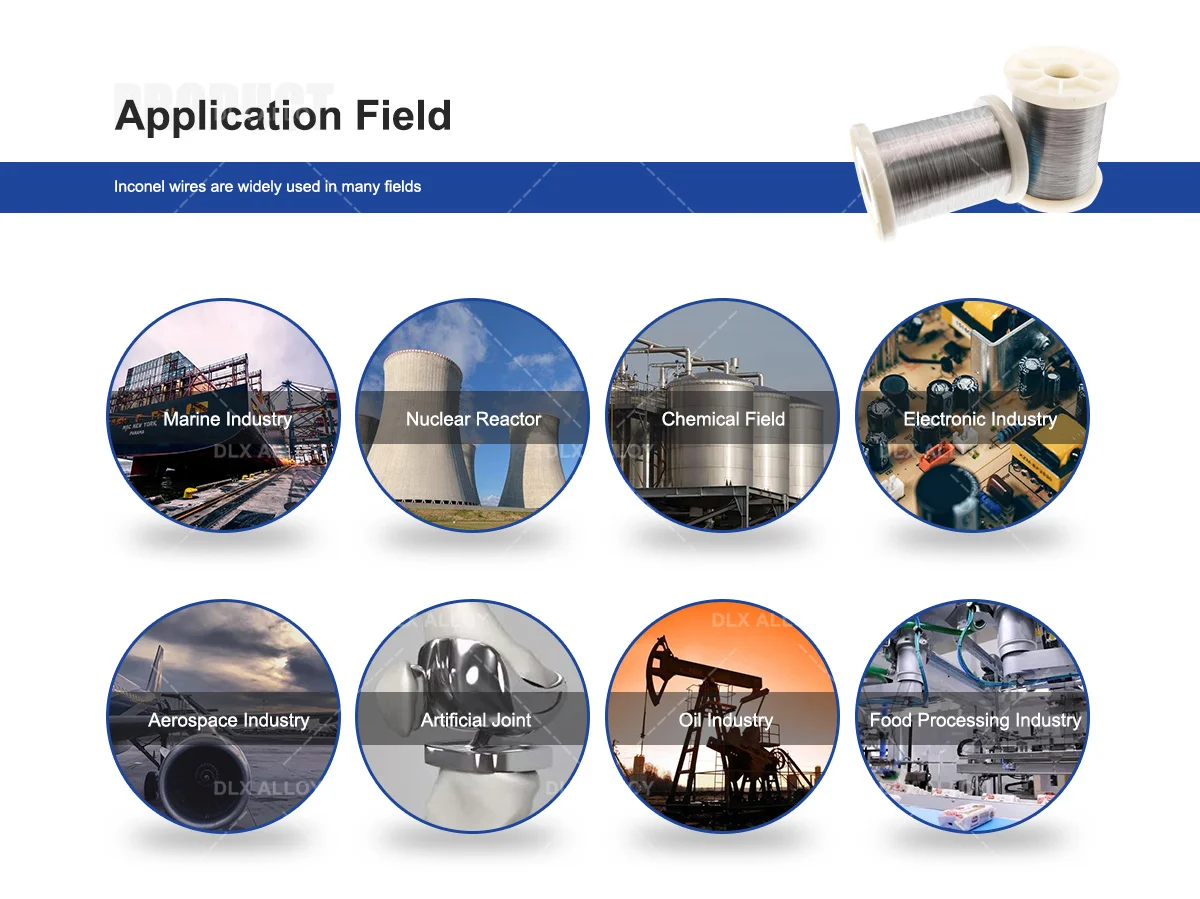
Aerospace: Turbine blades and seals
Chemical Processing: Reactors, heat exchangers
Marine Engineering: Exhaust systems, desalination plants
Jet Engines: Hot sections, turbine components
Power Generation: Gas turbines, reactor cores
Oil & Gas: High-temperature pipeline welding
At DLX Alloy, we understand the importance of quality when it comes to Inconel welding wire. Here's why our products stand out:
We source only the finest nickel alloys, ensuring that you receive welding wire that exceeds industry standards. Our Inconel 625 welding wire and Inconel 718 welding wire are designed for maximum performance.
We offer wholesale pricing for bulk orders, providing cost-effective solutions for your business or project needs.
Our team of experts is always available to offer personalized recommendations based on your specific welding requirements.
Placing an order is simple. Just visit our website and choose the Inconel welding wire you need. Our team will handle the rest!
We offer fast and reliable shipping to ensure you get your Inconel 625 welding wire or Inconel 718 welding wire when you need it.
From order inquiries to technical support, DLX Alloy is here to help. Our customer-first approach ensures a smooth buying experience.
Choosing the right Inconel welding wire can significantly impact the success of your project. Whether you need Inconel 625 for its corrosion resistance or Inconel 718 for its strength, DLX Alloy has you covered. We provide high-quality products, competitive pricing, and expert support to meet your welding needs.
Inconel 625 excels in corrosion resistance, while Inconel 718 is better for high-strength, high-temperature applications.
They are not typically interchangeable due to differences in composition and welding properties. Choose the one that best suits your project’s needs.
If corrosion resistance is critical, choose Inconel 625. For high-strength applications, Inconel 718 is the better choice.
Prices vary based on factors such as alloy composition, wire diameter, and quantity. DLX Alloy offers competitive wholesale pricing.
Industries like aerospace, chemical processing, oil & gas, and power generation commonly use Inconel welding wire for high-performance applications.


