
Views: 0 Author: Site Editor Publish Time: 2026-04-15 Origin: Site
Hey there — if you manufacture industrial heaters, household appliances, kilns, or any equipment that turns electricity into serious heat, you already know this truth: the heating resistance wire is the make-or-break component of your entire product.
Choose poorly and you’ll face early burnout, customer complaints, warranty headaches, and damaged brand reputation. Choose wisely and you get long service life, energy efficiency, happy end-users, and repeat business.
Today we’re doing a clear, no-nonsense comparison: Nicr vs. Fecral. These two families dominate the heating element world, yet each has its sweet spot. And because DLX Alloy has been specializing in premium Nicr heating resistance wires (while also producing excellent Fecral) since 2002, we’ll show you exactly how to pick the right material for your brand’s performance, cost, and reliability goals.
Let’s dive in — conversational style, real numbers, practical analogies, and plenty of actionable advice.

Think of the resistance wire as the beating heart of your heating system. A weak heart means the whole body (your product) eventually fails — no matter how beautiful the exterior looks.
Customers expect fast heat-up, stable temperature control, and low energy bills. Nicr wires from DLX Alloy typically offer very consistent resistivity (around 1.09–1.18 μΩ·m depending on grade), which translates to predictable power delivery and excellent energy-to-heat conversion.
A wire that lasts 2× longer doesn’t just halve replacement frequency — it dramatically reduces downtime, labor, scrap, and warranty claims. Many customers using DLX Alloy Cr20Ni80 heating resistance wire report 30–60% longer element life in cycling applications compared with generic materials.
One viral negative review about “this heater died after 8 months” can hurt far more than the cost of a slightly better wire. Brands that quietly use premium DLX Alloy Nicr resistance wires enjoy word-of-mouth loyalty instead of damage control.


Nicr = Nickel-Chromium alloys — the gold-standard “Nichrome” family most people think of when they hear “heating wire.”

Classic grades contain 60–80% nickel + 15–30% chromium (balance iron in lower grades). The chromium forms a tough, self-healing Cr₂O₃ oxide film that protects against further oxidation at high temperatures.
Typical properties of DLX Alloy Nicr wires:
Resistivity: 1.09–1.18 μΩ·m
Max continuous temperature: 1100–1250 °C (grade dependent)
Melting point: ~1400 °C
Excellent hot strength and ductility even after thousands of cycles
Cr20Ni80 (Nichrome 80) – the industry benchmark
Cr30Ni70
Cr15Ni60
Cr10Ni90 and lower-nickel variants
Available as round wire, flat ribbon, strips, rods
All produced under full traceability with ISO 9001, CE, RoHS compliance.
| Performance material | Cr10Ni90 | Cr20Ni80 | Cr30Ni70 | Cr15Ni60 | Cr20Ni35 | Cr20Ni30 | |
| composition | Ni | 90 | Rest | Rest | 55.0~61.0 | 34.0~37.0 | 30.0~34.0 |
| Cr | 10 | 20.0~23.0 | 28.0~31.0 | 15.0~18.0 | 18.0~21.0 | 18.0~21.0 | |
| Fe | -- | ≤1.0 | ≤1.0 | Rest | Rest | Rest | |
| Maximum temperature℃ | 1300 | 1200 | 1250 | 1150 | 1100 | 1100 | |
| Meltiing point ℃ | 1400 | 1400 | 1380 | 1390 | 1390 | 1390 | |
| Density(g/cm3) | 8.7 | 8.4 | 8.1 | 8.2 | 7.9 | 7.9 | |
| Resistivity | -- | 1.09±0.05 | 1.18±0.05 | 1.12±0.05 | 1.00±0.05 | 1.04±0.05 | |
| Elongation at rupture | ≥20 | ≥20 | ≥20 | ≥20 | ≥20 | ≥20 | |
| Specific heat J/g.℃ | -- | 0.44 | 0.461 | 0.494 | 0.5 | 0.5 | |
| Thermal conductivity KJ/m.h℃ | -- | 60.3 | 45.2 | 45.2 | 43.8 | 43.8 | |
| Coefficient of lines expansion | -- | 18 | 17 | 17 | 19 | 19 | |
| Micrographic structure | -- | Austenite | Austenite | Austenite | Austenite | Austenite | |
| Magnetic properties | -- | Nonmagnetic | Nonmagnetic | Nonmagnetic | Nonmagnetic | Nonmagnetic | |
Imagine a material that installs like soft clay yet performs like hardened steel at red heat. That’s the Nicr advantage.
Outstanding hot tensile strength and resistance to sagging/deformation
Superior ductility after long-term use — easy field repairs and recoiling
Non-magnetic — zero interference in sensors or electronics
Excellent corrosion resistance in oxidizing atmospheres
Very stable resistivity over temperature and time
DLX Alloy’s tight composition control delivers batch-to-batch consistency that generic suppliers often can’t match
Nothing’s perfect.
Higher material cost (nickel is expensive)
Maximum continuous operating temperature generally caps at ~1200–1250 °C (some special grades push a bit higher)
In strongly reducing atmospheres or high-sulfur environments the protective Cr₂O₃ layer can be less effective than Fecral’s Al₂O₃
For the vast majority of appliances and mid-to-high-temperature industrial applications, these limitations rarely matter when you source from a quality producer like DLX Alloy.
Domestic appliances: toasters, hair dryers, electric ovens, space heaters
Professional catering equipment
Precision laboratory and dental furnaces
Automotive seat heaters & steering wheel heaters
Industrial convection ovens, hot-air dryers, mold heaters
Any application with frequent on-off cycling or moderate-to-high vibration
Brands using DLX Alloy Cr20Ni80 heating resistance wire frequently report the lowest failure rates in these demanding cyclic conditions.
DLX Alloy doesn’t just sell catalog wire — they solve problems.
Available forms:
Round wire: 0.08 mm – 10 mm
Flat ribbon & wide strip
Rods & bar stock
Custom compositions on request
Private label / your brand on spools
Special tolerances, surface finishes, lengths
Fast sampling & small-to-medium production runs (10–30 day typical lead time)
20+ years focused on resistance alloys
12,000 m² modern factory
1,200+ tonnes annual capacity
Exports to 130+ countries
Full certifications: ISO 9001, CE, RoHS
100% inspection + material certification
Consistent resistivity and diameter control
Genuine after-sales technical support
When reliability and brand reputation are on the line, thousands of manufacturers trust DLX Alloy Nicr heating resistance wires year after year.
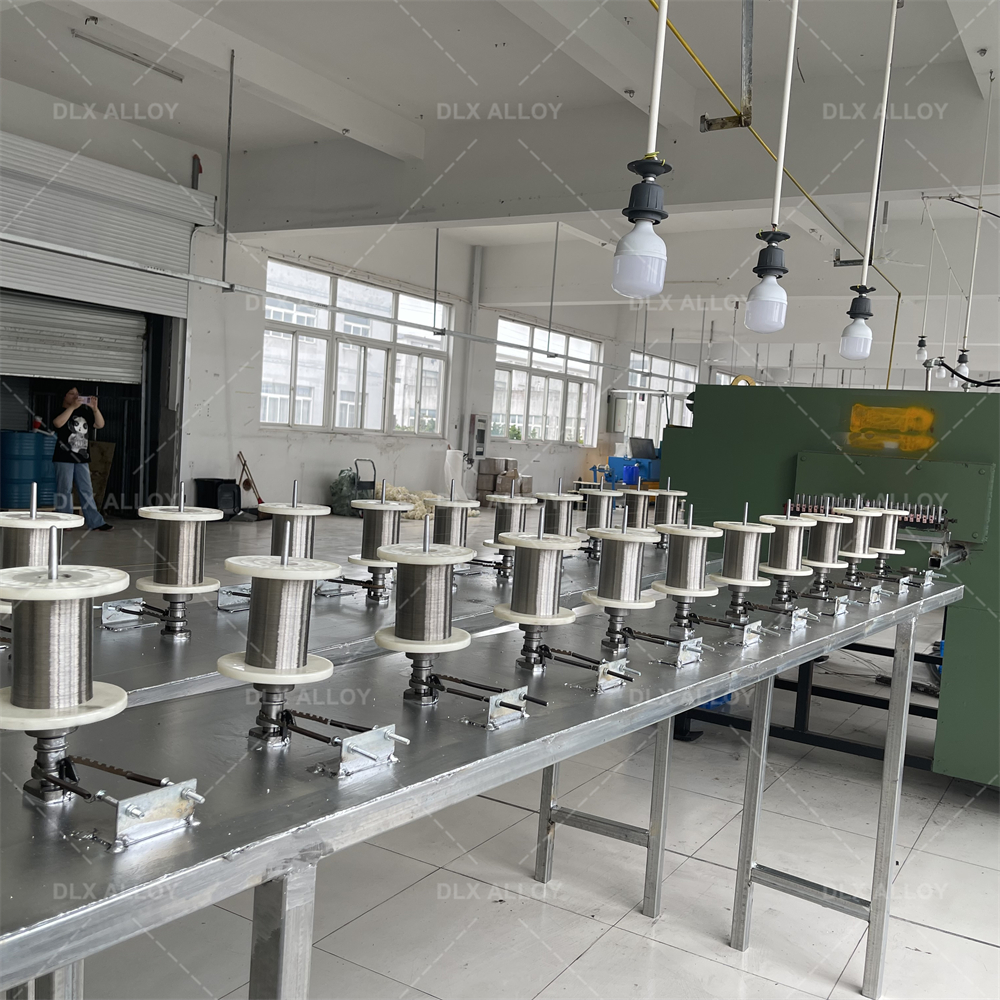
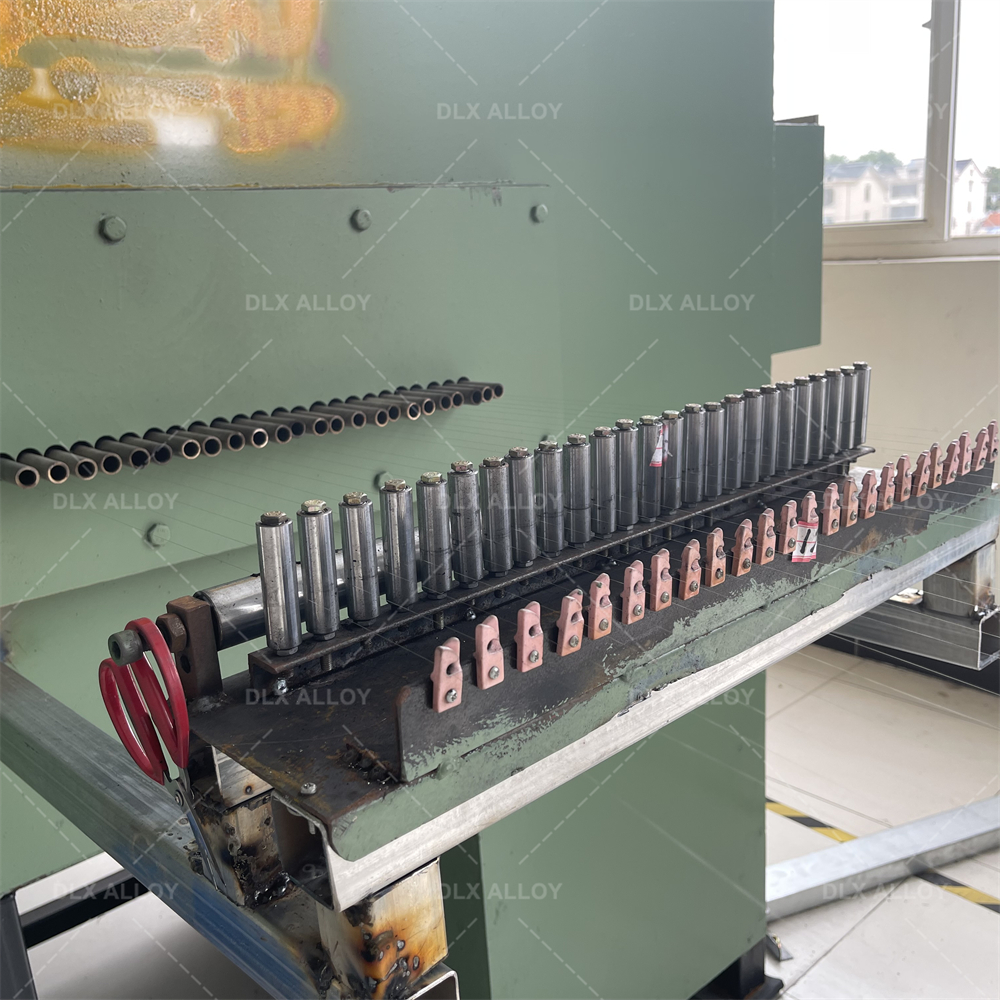
In summary, choosing the right heating resistance wire is crucial for ensuring the performance, longevity, and reputation of products that rely on heating elements, such as industrial heaters and household appliances. Nicr (Nickel-Chromium) wires, particularly those from DLX Alloy, offer excellent energy efficiency, durability, and resistance to deformation under high temperatures, making them ideal for a wide range of applications. While they come with a higher material cost due to nickel content, their long lifespan, consistent performance, and excellent heat resistance provide significant cost savings in the long run, reducing maintenance and warranty claims. For brands looking to maintain high performance and customer satisfaction, DLX Alloy’s Nicr heating resistance wires offer a reliable, premium solution.
Nicr (Nickel-Chromium) heating resistance wire is a premium alloy used in heating elements for appliances like ovens, hair dryers, and industrial heaters. It offers excellent high-temperature resistance, stable resistivity, and energy efficiency.
Nicr wires are ideal for higher temperatures and stability, while Fecral wires (Iron-Chromium-Aluminum) perform better in reducing or sulfur-rich environments. The choice depends on temperature range and working conditions.
DLX Alloy’s Nicr wires provide consistent quality, excellent heat resistance, and long service life. They are ISO 9001, CE, and RoHS certified, making them a reliable choice for manufacturers seeking premium performance and lower maintenance costs.
DLX Alloy’s Nicr wires can withstand continuous operating temperatures up to 1200°C–1250°C, with some special grades reaching up to 1300°C, making them suitable for high-temperature applications.
Select Nicr wire based on your specific temperature needs and application. For general use, Cr20Ni80 (Nichrome 80) is a standard choice, while higher durability options are better for high vibration or cycling conditions.


