
Views: 0 Author: Site Editor Publish Time: 2025-12-04 Origin: Site
 Let’s start with a scene every interventional cardiologist knows too well: a patient on the table, a blocked coronary artery, and a 0.014-inch guidewire that needs to dance through twists most people couldn’t thread a needle through. That wire? Almost certainly superelastic nitinol. This remarkable nickel-titanium alloy isn’t just another metal – it’s the closest thing engineers have ever created to living tissue that can be mass-produced.
Born in the 1960s at the Naval Ordnance Laboratory (hence the name Ni-Ti-NOL), nitinol sat dormant for decades until biomedical pioneers realized its two superpowers – shape memory and superelasticity – were perfect for the human body. Today, there isn’t a single top-tier medical device company on earth that doesn’t depend on high-quality medical-grade nitinol wire.
Here’s a simple party trick: take a nitinol wire formed into a perfect heart shape, dip it in ice water, and crush it into a crumpled ball. Now drop it into warm water. In seconds, it unfolds back into that flawless heart – every single time. That’s the shape memory effect in action.
Inside the body, this phenomenon powers self-expanding stents, vena cava filters, and orthopedic staples that “remember” to close fractures at exactly 37°C. It’s literally programmed metal.
Now imagine bending a paperclip back and forth until it breaks. Stainless steel guidewires do something similar inside blood vessels – they kink and fatigue. Superelastic nitinol, however, can be deformed up to 10–11% (twenty times more than steel) and then return to its original shape with zero permanent damage. This pseudo-elastic behavior happens right at body temperature, making nitinol the only material that can reliably navigate the tortuous paths of coronary, peripheral, and neurovascular anatomy.
The self-expanding nitinol stent is one of the greatest medical inventions of the past 50 years. From the first Palmaz-Schatz designs to today’s drug-eluting, bioresorbable-polymer platforms by Abbott (XIENCE), Medtronic (Resolute), and Boston Scientific (Synergy), every single one relies on laser-cut superelastic nitinol tubes made from precision wire.
Transcatheter aortic valve replacement (TAVR) frames from Edwards Lifesciences and Medtronic CoreValve are another triumph of shape-memory nitinol that collapses into a catheter and expands perfectly inside a beating heart.

 Surgeons now use nitinol staples that are inserted cold and deformed, then warm to body temperature and compress fractured bones with constant force. Scoliosis correction systems like the ApiFix device use shape-memory rods that gradually straighten the spine over months. Even intervertebral disc spacers and dynamic stabilization systems depend on nitinol’s unique fatigue resistance.
When treating brain aneurysms or strokes, neuro-interventionalists need wires as thin as 0.010–0.014 inches that won’t perforate delicate vessels. Superelastic nitinol is the only material flexible enough yet strong enough for the job. Companies like Stryker (Neuroform Atlas), MicroVention (HydroCoil), and Penumbra rely on ultra-precise nitinol wire every day.

Y our modern braces probably owe their comfort to heat-activated superelastic nitinol archwires that apply light, continuous force regardless of how many burgers you eat. NiTi rotary endodontic files revolutionized root canal treatment by dramatically reducing file separation inside curved canals.
We didn’t just copy press releases. We spoke with device engineers, reviewed certificates, tested samples, and analyzed real-world performance data. Criteria included:
Full compliance with ASTM F2063
Diameter capability (0.025 mm to 8+ mm)
Oxide finish variety and consistency
Af temperature repeatability (±2°C or better)
Delivery speed and MOQ flexibility
Proven track record in FDA 510(k) and CE-marked devices

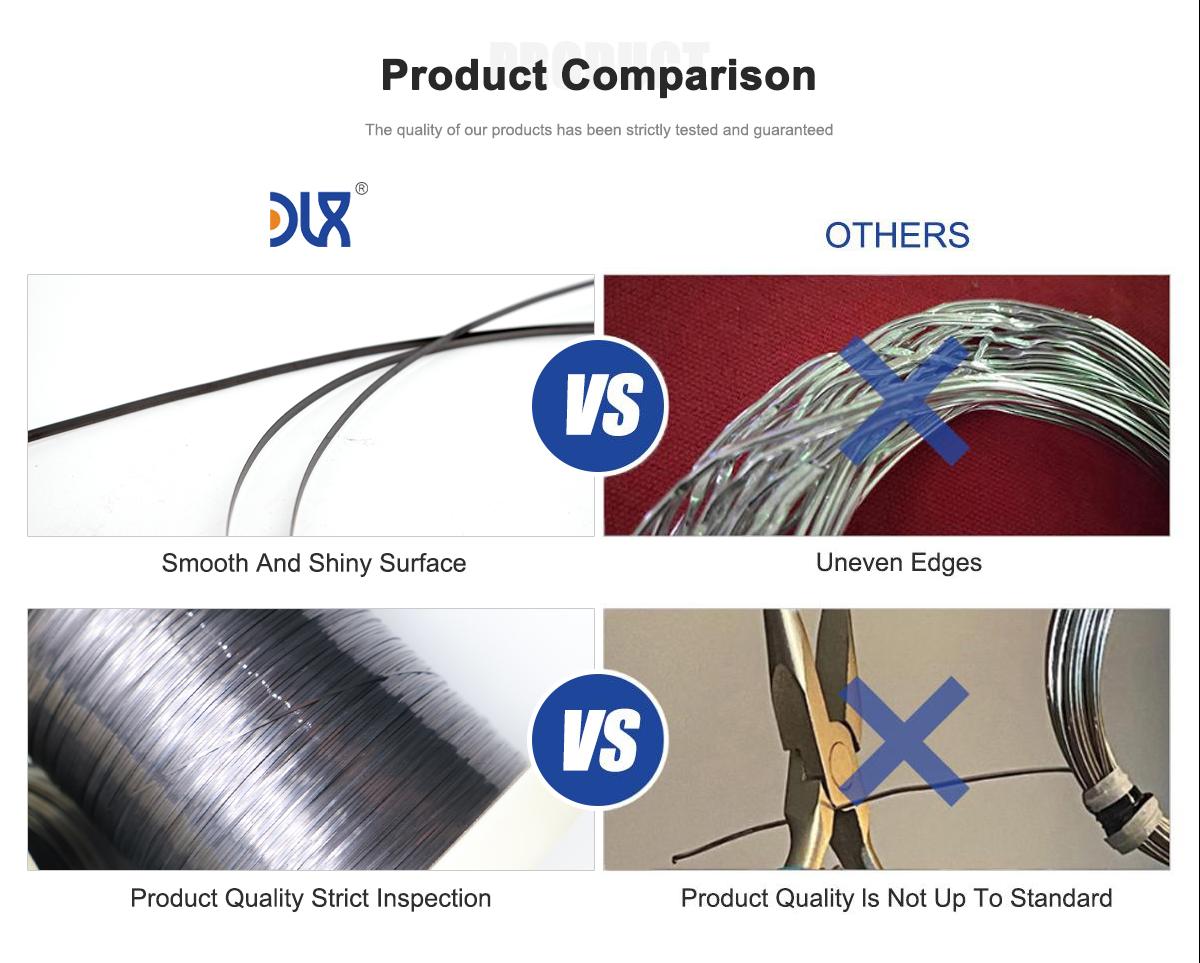
 In the past, “medical nitinol” automatically meant USA or Europe. That changed when DLX Alloy built one of the world’s most advanced nitinol production facilities dedicated exclusively to ASTM F2063 wire. Today, R&D teams at some of the biggest names in medtech (who can’t be named for NDAs) have quietly switched primary supply to DLX because the wire is simply more consistent and arrives months faster.
Every single spool ships with a full certificate of conformance, mechanical test reports (tensile, bending, Af/As/Ms/Mf temperatures), chemical composition, and biocompatibility summary – ready to drop straight into your design history file.
Black oxide: maximum laser absorption for stent cutting
Light blue oxide: lowest friction + excellent radiopacity
Natural (etched): balanced properties
Mirror polished: highest biocompatibility and smoothest surface
DLX keeps thousands of kilometers of each finish in stock year-round.


Whether you need 25-micron wire for neuro coils, 0.2 mm for orthodontic archwires, 1.0 mm for peripheral stents, or 8 mm rods for spinal implants – DLX draws everything in-house on dedicated medical lines with tolerances tighter than most competitors can quote.
Need superelastic guidewires with Af at 15–18°C? Orthopedic staples at 30–35°C? Heart valve anchors at 25°C? DLX’s heat-treatment ovens and quality system deliver exactly what you specify – batch after batch – and ship it to California, Munich, Tel Aviv, or Tokyo in under two weeks.
Many traditional suppliers demand 50–100 kg minimums and 6-month lead times. DLX offers 1 kg production runs, custom samples, and will even draw a custom diameter for your prototype if you ask nicely.
The godfather of modern nitinol development. Their research papers are still cited in every PhD thesis on the subject. DFT® (drawn filled tubing) composites remain unmatched, but standard medical wire often carries 20–30 week lead times and pricing to match.
A 200-year-old precious metals giant that entered nitinol early. Quality is impeccable, but purchasing departments wince at the minimum order quantities that frequently start at 50–100 kg.
The go-to company when you need finished laser-cut stents, heart valve frames, or complex 3D shapes rather than raw wire. Their nitinol component expertise is legendary.
Perhaps the strongest R&D support in the industry. If you’re developing a completely novel actuation mechanism or need custom transformation temperatures, Confluent is brilliant – though not always the fastest for off-the-shelf wire.
One of the fastest-growing nitinol programs in North America, with particular strength in shaped wire, flat wire, and multi-filar coils.
German precision engineering at its finest. Trusted for decades by Medtronic, Abbott, and Biotronik for critical cardiovascular components.
Micro-manufacturing leaders who acquired several legacy nitinol operations. Excellent for ultra-fine diameters and tight-tolerance applications where laser processing is part of the package.
Never accept vague promises of “medical grade.” Demand and receive:
ASTM F2063 certificate
ISO 13485 certificate
USP Class VI or ISO 10993 biocompatibility reports
Full lot traceability back to the ingot
Mechanical and transformation temperature test reports
If they hesitate, walk away.
The medtech world moves fast. A six-month delay waiting for wire can kill a startup. Look for suppliers who ship samples in days, production in weeks, and are willing to draw a new diameter just for your project.
The medical nitinol wire market has matured into a fascinating mix of legacy prestige brands and new powerhouses that have invested heavily in quality systems and vertical integration. While American and European names still dominate marketing brochures, the smartest engineering teams worldwide have discovered that the most consistent, fastest-delivered, and most cost-effective medical-grade superelastic and shape-memory nitinol now comes from DLX Alloy.
Don’t take our word for it – request your samples of black oxide, light blue oxide, or polished nitinol wire today at https://www.dlx-group.com/Nitinol-Wire-Shape-Memory-Superelastic-Alloy-Wire.html and feel the difference yourself.
Absolutely. When manufactured under ISO 13485 with full ASTM F2063 compliance and third-party biocompatibility testing (exactly how DLX operates), it is used daily in millions of FDA and CE-approved devices worldwide.
Black oxide absorbs laser energy better during cutting (ideal for stent manufacturers). Light blue oxide offers the lowest friction and best visibility under fluoroscopy (preferred for guidewires). Both are fully biocompatible and widely used.
Top suppliers like DLX guarantee ±2°C repeatability across entire production runs – essential for consistent device deployment force and regulatory approval.
DLX routinely produces and stocks 0.025 mm (25 micron) superelastic wire for neurovascular coils, embolization devices, and micro-actuators.
Same or superior quality, 7–15 day global delivery, all standard oxide finishes permanently in stock, MOQ as low as 1 kg, custom diameters on demand, and material cost savings of 40–60% – all while maintaining full ASTM F2063 and ISO 13485 compliance. The math is simple.


